Three weeks to find
the fabric of a collection.
A young Franco-Vietnamese fashion brand dreamed of banana, pineapple and hemp fibres for its first collection. It had no supplier, no workshop and not a single price. Hanh-Line and Céline went into the field together to bring all of that back before December.
01A project full of unknowns
The project fits in a few lines. A ten-piece capsule collection, a Vietnamese identity designed for a French audience, and carefully chosen materials: banana fibre, pineapple fibre, hemp. Bamboo was ruled out from the start. The founder planned a trip to Saigon in December to make her first prototypes.
What was missing was everything else. How much does a metre of pineapple fabric cost? Which workshop will sew a material it does not supply itself? From how many pieces? Without those answers there was no way to build a financing plan, or even to know whether the collection was realistic.
She could have searched on her own once there. But December in Vietnam means year-end holidays, short days to compare offers, and difficult conversations without speaking Vietnamese. The risk was spending the whole trip searching rather than deciding.
The idea of the mission was simple: that she arrive in December with her fabrics in hand, and only decisions left to make.
The brief was approved with the brand's two partners in mid-October. The fieldwork began the next day.
02Saigon, one stall after another
Hanh-Line and Céline ran the mission together, on the ground. Around ten fabric suppliers visited in Saigon, from wholesale markets to small specialist shops, each time with the same questions: where does the fibre come from, what is the exact composition, what is the minimum order, what are the lead times, and does the answer hold when the question is asked a second time, in Vietnamese.
The first finding was a little unsettling. In the South, most fabric on sale comes from China, often without a certificate. The colour cards say so themselves: the labels are in Chinese. Locally grown plant fibres do exist, but they are mostly found in the north of the country.
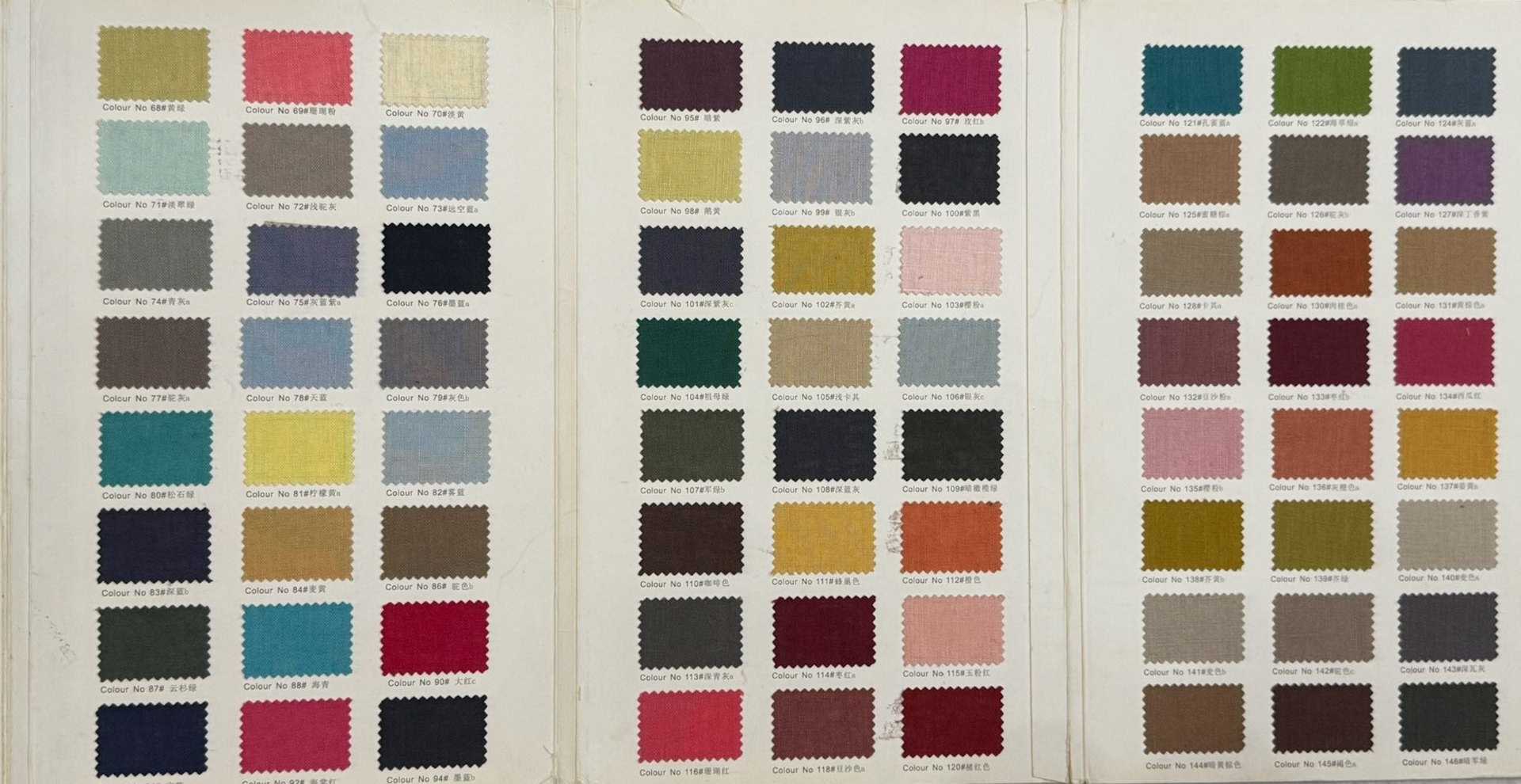
Of the ten or so suppliers met in Saigon, only one could produce custom artistic prints while documenting where its material came from. It is the kind of information no online search provides, and it changes everything else.
03What the field revealed
The North brought the first good news. A supplier there offers two pineapple-based fabrics, blended with cotton, with no minimum order. Its other references start at several hundred kilos, out of reach for a first collection: knowing which ones are accessible avoids falling for a fabric that cannot be ordered.
In Saigon, another supplier stood out. Its pineapple fabric is soft to the touch, its bamboo remarkably fluid, and it was opening its own factory in November, open to visits in December. One detail matters, though: below twenty metres, its prices rise by half. Better to know that before designing a collection, not after.
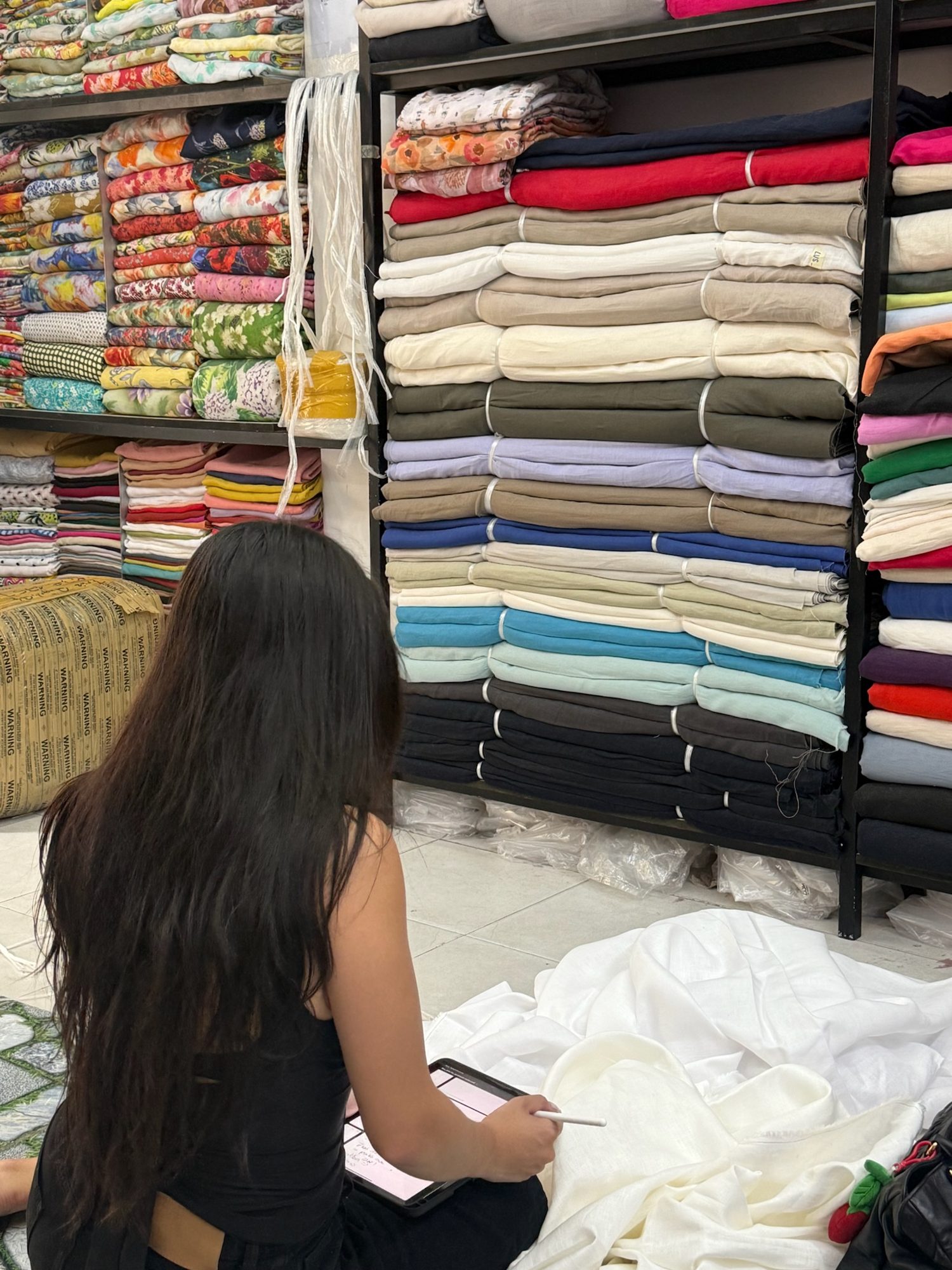
The hemp, impossible to find elsewhere, came from a small organic producer, as did a locally made linen that completes the palette. The question of certification remains: these fabrics have none. There are two routes, choosing materials already certified elsewhere or having the fabrics tested by a laboratory in Vietnam. Laboratory quotes were requested in Ho Chi Minh City.
04Finding the workshop
Fabric alone does not make a collection. A workshop was still needed that would work with materials it does not supply itself, which many refuse: most prefer their own fabrics and their usual suppliers.
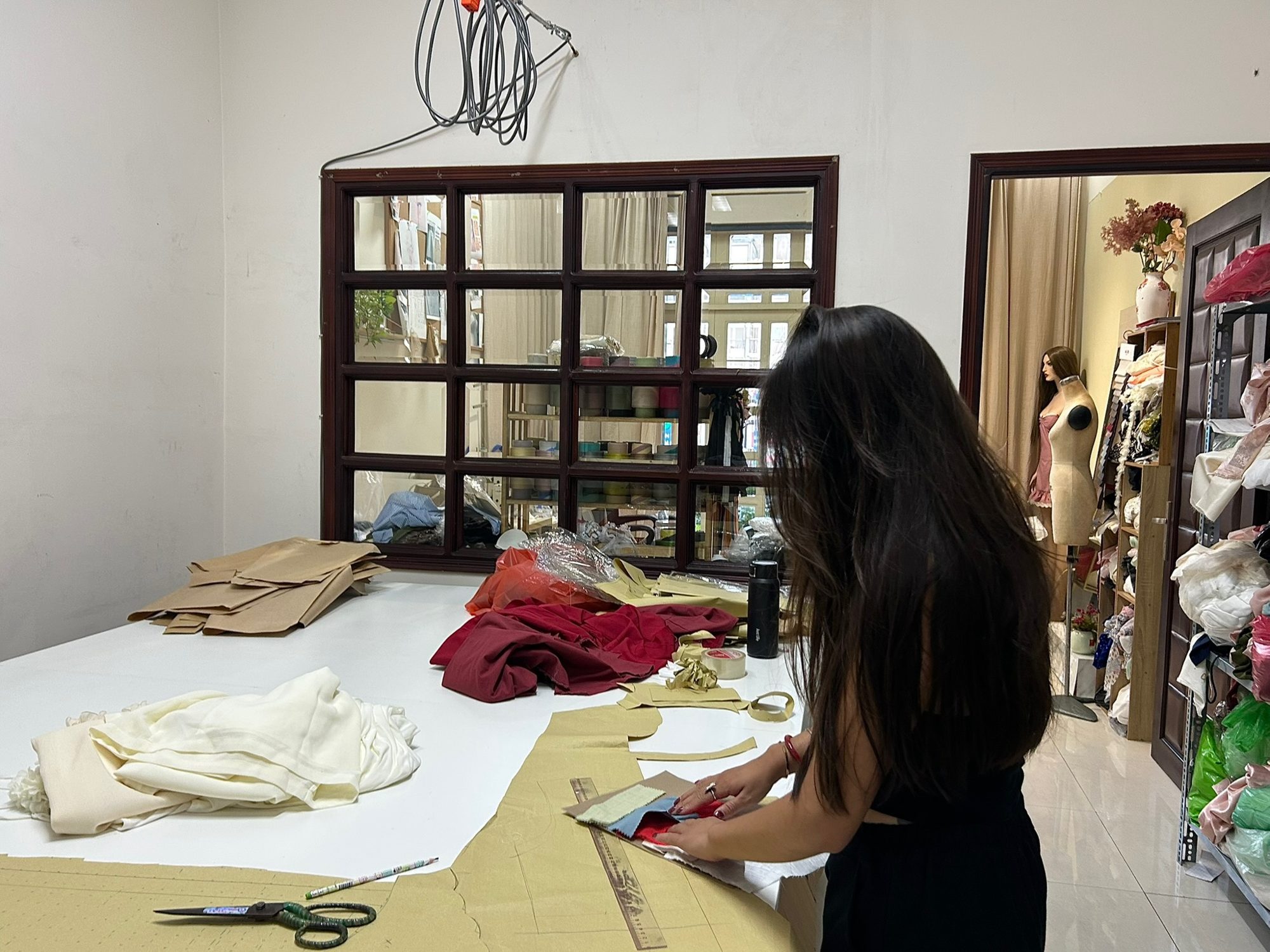
Several workshops were visited and compared. The one selected makes a prototype in seven days, a piece in two to five days, and accepts small runs: twenty pieces per design, five per size, a minimum that can still be negotiated. For the founder, these figures became the basis of her plan: a volume, lead times, an order of magnitude for costs.
05Arriving in December to decide
In early November, the hemp, linen and pineapple samples left for France, entrusted to someone close to the founder who was flying back from Saigon. She could touch them, compare them and make her choices from Paris, before even boarding a plane.
The route to the end customer was mapped too. The free trade agreement between the European Union and Vietnam can reduce customs duties on clothing, provided their origin is documented. For small volumes, however, the paperwork costs more than it saves: the founder chose to import her stock into France and build the duties into her retail price.
The calendar is now concrete. In December, a visit to the supplier's factory and to the workshop, a first prototype and the shoot for the brand's first content. In February, one or two pieces on pre-order. In June, the first collection.
In Vietnam, the material exists. It is not found online: it is found by knocking on the right doors, and asking in the right language.
This is what liên brings to European brands that want to produce or source in Vietnam: two partners in the field, Vietnamese speakers, who scout, compare and connect, so that every trip is spent deciding.
Producing in Vietnam
A material to find,
a workshop to choose?
liên works with European brands from the first scouting trip to introductions with suppliers and workshops on the ground.
Let's talk →